news
Fanzine GX #2 & 64NOPs #1: impressions
Fanzines for 8-bit Amstrad machines are nothing new, and yet I remain pleasantly surprised by the quality of the various efforts that have appeared here and there of late. Two new issues arrived in my letterbox, and I would like to say a word about them here.
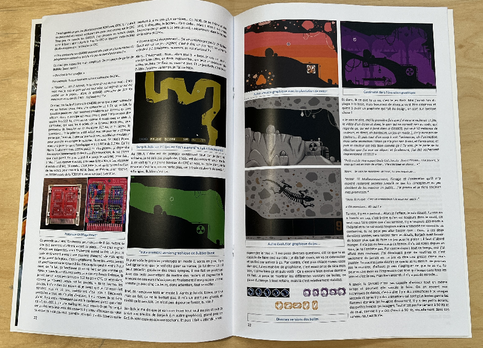
Fanzine GX #2 is out. The first thing you notice is immediate: the printing, on glossy paper, is of far better quality than the first issue, and it handles perfectly, more pleasantly. The content, still mostly “gaming” oriented, has nevertheless moved on in this issue to offer a few articles on hardware. The small hand-drawn illustrations are as pleasant as ever.
Unexpected, and a good surprise: the “marathon” interview with Roudoudou, very interesting to read (the passion comes through faithfully — thank you for sharing it!). Working in the Amstrad world mainly as a programmer, I am still left technically hungry; but never mind, it is a great pleasure to find oneself plunged “player side” into the GX-4000 catalogue. So well done to Oncle Ced and his team, the approach is right and I am looking forward to the next issue — to which I have just lent a hand, as it happens, by writing two articles.
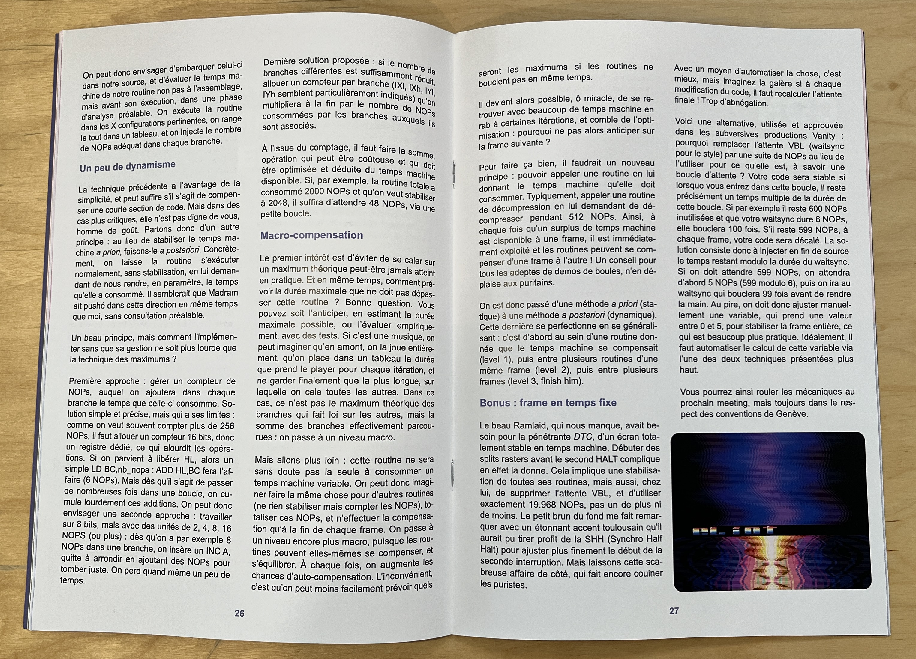
I also had the honour of receiving the first issue of a new magazine, 64NOPs. Here too the printing is impeccable, and the whole comes with a very careful presentation. The content, written in faultless French, leans heavily towards demomaking. Eliot offers a genuinely unique article, setting out the history of sprites moved by hardware scrolling in Amstrad demos.
Programmers get their share too, with varied technical articles whose approach recalls the days of the Amstrad Live, Quasar CPC and Another World fanzines. Still in this decidedly well-stocked issue, there is a thorough presentation of UniDOS, Offset’s new programming interface providing the abstraction of a file system, directories included, for the great majority of today’s storage cards.
Finally, the questions asked in the CNGSoft and Mage interviews are very much to the point (the latter especially took me back to the Epsilonian years around 1995 — thank you!). To conclude: a nice effort, and let us hope this first issue is the beginning of a long series!